
The Spirit of the Crossroads: A History of the City of Hearne Golf Course


The City of Hearne Golf Course is more than just a 9-hole track; it is a living monument to the resilience and community spirit of a town known as the "Crossroads of Texas". Established during the heart of the Great Depression, this course stands as one of the oldest public golf facilities in Central Texas, offering a window into a bygone era while continuing to evolve for the modern player.
A Vision Born of Necessity (1935–1938)
The story begins in 1935, a time when Hearne was looking for ways to bolster its community and provide relief during the economic hardships of the 1930s. Like many small Texas towns of the era, Hearne sought to create recreational amenities that would not only improve the quality of life for its residents but also draw visitors from the surrounding Brazos Valley.
On August 12, 1938, a vision for a comprehensive city park was officially unveiled. The ambitious plan included a swimming pool, a bathhouse, and a parking lot, estimated at $23,491. Nestled within this plan was a modest $1,800 proposal for a 9-hole golf course. While the budget was small, the ambition was grand: to provide a place where families and friends could gather under the Texas sun.
Built by the Community, for the Community (1940–1941)
The development of the course was part of a broader movement supported by the Works Progress Administration (WPA). The WPA contributed $44,000 for materials and labor, while the City of Hearne invested $22,000 to bring the park to life.
Key milestones of this era included:
The Swimming Pool & Bathhouse (June 21, 1940): The first unit of the park to open, featuring the iconic native rock construction that still defines the park's aesthetic today.
The Golf Course Opening (April 1, 1941): After years of planning and labor, the course finally opened for play. A local newspaper famously noted, "It’s not totally finished but good enough to play on" [Original Text].
Native Rock Architecture:
The clubhouse and entrance were built using native stone, a hallmark of WPA projects that gave the facility an enduring, rugged character.
The Era of Sand Greens
In its earliest days, Hearne was a "sand green" course. Before modern irrigation and hybrid grasses were common in rural Texas, sand greens were the standard. These were made of oil-soaked sand that players would "smooth" with a heavy roller before putting. This unique style of play is a cherished part of our history, representing the grit and ingenuity required to play the game in the Texas heat. It wasn't until the mid-1960s that the course transitioned to the lush grass greens enjoyed today.
A Challenging, Historic Layout
Today, the course remains an intimate 9-hole design that rewards strategy over raw power. While the par is 36 for nine holes (par 72 for 18), the layout offers complexities that challenge even seasoned players.
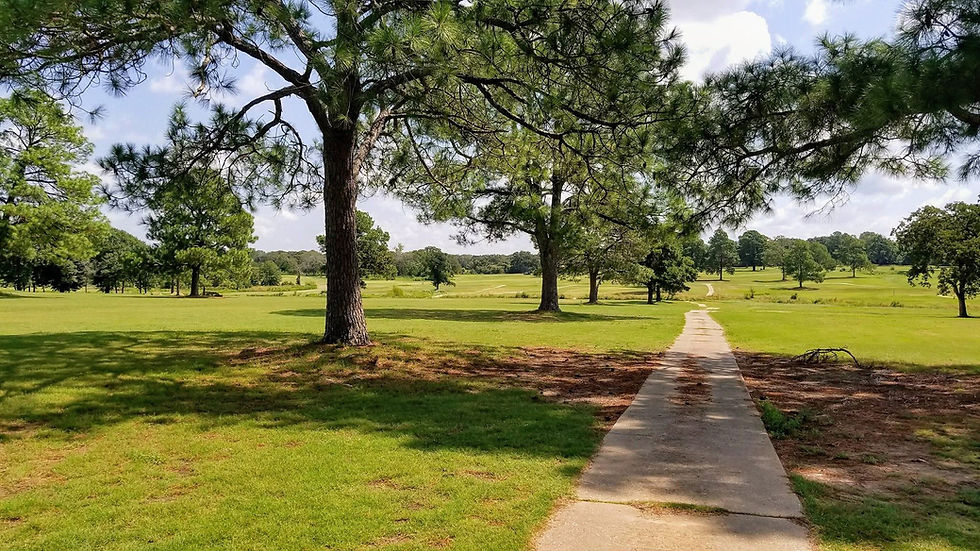
Signature Features: The course is known for its elevated, mound-shaped greens, pine-lined fairways.
Turf Details: Players now enjoy expertly tended Bermuda Grass greens and Bermuda Grass fairways, providing a professional-quality surface year-round.
A "Spontaneous" Experience: Unlike many modern clubs, Hearne Municipal prides itself on accessibility—no tee times are required, allowing for a relaxed, spontaneous round of golf.
Revitalization and the Future
Under the leadership of City Manager Alonzo Echavarria-Garza since 2022, and in close partnership with the Hearne Golf Course Association, the course has entered a new era of revitalization. Recent and ongoing improvements focus on: Modernizing Maintenance: New aeration and reel-sharpening equipment, along with a committed fertilizer program, have significantly improved turf conditions.
Community Outreach:
A renewed focus on youth programs and local tournaments is bringing a new generation of golfers to the fairways.
As we look toward our 100th anniversary, the City of Hearne Golf Course remains a proud symbol of resilience and hospitality. We aren't just a place to play golf; we are the "Crossroads" where history and the future meet on every tee box.

Comments